Fire Door Compliance in the UK: Regulations, Inspections & Legal Duties
If your business operates from a non-domestic building in the UK, fire door compliance is not optional – it is a legal obligation. Whether you manage a commercial office, a care home, a school, or a high-rise residential block, the correct installation, inspection, and maintenance of fire doors is central to meeting UK fire door… Continue reading Fire Door Compliance in the UK: Regulations, Inspections & Legal Duties
If your business operates from a non-domestic building in the UK, fire door compliance is not optional – it is a legal obligation. Whether you manage a commercial office, a care home, a school, or a high-rise residential block, the correct installation, inspection, and maintenance of fire doors is central to meeting UK fire door regulations and protecting everyone inside your building.
This guide covers everything you need to know: the legal framework, inspection schedules, installation standards, and the documentation required to stay compliant.
Key Takeaways for UK Businesses
- Legal Obligations: UK fire door regulations are governed primarily by the Regulatory Reform (Fire Safety) Order 2005, and the Fire Safety (England) Regulations 2022 – non-compliance carries serious penalties.
- Designated Responsibility: Every non-domestic premises must appoint a Responsible Person accountable for fire door compliance.
- Inspection Schedules: Buildings over 11 metres face quarterly inspections of communal fire doors and annual checks of flat entrance doors.
- Fire Resistance Ratings: Not all doors must meet FD30 or FD60 standards. While these are the most common British classifications, some buildings may require compliance with European classifications instead. The correct rating depends on your building type, risk level and applicable certification route.
- Documentation is Mandatory: Inspection logs and maintenance records are required for regulatory audits and must be kept up to date.
Why Fire Door Compliance Matters for Your Business
For businesses, fire door compliance is both a moral and legal responsibility. Non-compliant fire doors put occupants at serious risk, but they also expose building owners and managers to enforcement notices, prosecution, and significant financial liability. Inspectors from the local Fire and Rescue Authority can issue improvement notices or, in serious cases, prohibit use of the building entirely.
Beyond the legal risk, fire door regulations exist because compliant fire doors genuinely save lives. They restrict the spread of fire and smoke, giving occupants critical extra minutes to evacuate and emergency services time to respond. Ensuring compliance is not a tick-box exercise – it is a fundamental part of your duty of care.
Legal Framework for Fire Door Compliance in the UK
UK fire door compliance falls under several legislative requirements, with the Regulatory Reform (Fire Safety) Order 2005 (RRO) acting as the cornerstone for fire safety in England and Wales.
This law mandates that all non-domestic properties, including commercial and public buildings, install fire doors for commercial buildings and maintain other critical fire safety features. Businesses managing shared spaces should also be aware of communal fire door regulations.
Three further pieces of legislation have significantly extended fire door obligations in recent years and must now be part of every Responsible Person’s compliance framework:
- Fire Safety Act 2021: Extended the scope of the Fire Safety Order to explicitly cover the structure, external walls, and individual flat entrance doors in multi-occupied residential buildings.
- Building Safety Act 2022: Introduced the role of the Principal Accountable Person for higher-risk buildings (18 metres or over, or seven or more storeys), established the Building Safety Regulator, and created the Gateway approval process for new high-rise construction. It also significantly increased penalties for non-compliance.
- Fire Safety (England) Regulations 2022: Came into force in January 2023, introducing specific fire door inspection frequencies for multi-occupied residential buildings over 11 metres.
Appointing a Responsible Person
Under the RRO, every non-domestic property must appoint a ‘Responsible Person’ to oversee fire safety protocols, including fire door compliance. This individual has legal responsibility for:
- Conducting risk assessments.
- Implementing fire safety measures.
- Ensuring fire doors are inspected, maintained, and functional.
The role of the Responsible Person extends to keeping thorough records of all fire safety activities. This documentation is not only a compliance requirement but also a crucial resource during safety audits and inspections.
Under the Building Safety Act 2022, higher-risk buildings must additionally designate a Principal Accountable Person—a more senior duty holder responsible for the safety of the building’s structure and shared areas.

Fire Door Standards: Understanding Fire Resistance Ratings
The fire resistance rating of a door determines how long it can contain fire and smoke. Common classifications include:
Key Fire Door Ratings
- FD30: Designed to withstand fire for 30 minutes, often found in multi-dwelling residential buildings and smaller commercial spaces.
- FD60: Provides 60 minutes of fire resistance, typically used in high-risk or larger buildings.
- FD30S: Flat entrance doors that lead onto shared corridors and stairwells are now required to carry an FD30S rating. The ‘S’ denotes an additional smoke-sealing requirement, which was clarified under the Fire Safety (England) Regulations 2022 and applies to multi-occupied residential buildings.
The Approved Document B amendments that came into force on 2 March 2025 have removed references to the old national classification system BS 476 for reaction to fire and roofs, in favour of the harmonised European standard BS EN 13501. Full removal of BS 476 for fire resistance testing will follow in 2029. This means:
- Fire doors for new buildings and major renovations must now be specified and tested to BS EN 1634-1 and classified under BS EN 13501-2.
- Existing doors installed under BS 476 and still performing correctly do not need to be replaced solely because they carry an older certification.
- When procuring new fire doors, always request third-party certification to the current European standards.
Under BS EN 13501-2, fire doors are classified using a letter-based system. E indicates integrity, meaning the door resists the passage of flames and hot gases. I refers to insulation, meaning it also limits heat transfer. W denotes radiation, indicating control of radiant heat. A door classified as EI30, for example, provides both integrity and insulation for 30 minutes, making it broadly comparable to an FD30 under the old British system. EI60 is the equivalent of FD60.
Property managers should consult with fire safety professionals to identify the correct fire door rating for their specific environment. Learn more about communal fire door regulations.
Building Height and Fire Door Regulations
For buildings over 11 metres, the Fire Safety (England) Regulations 2022 introduce specific fire door requirements to ensure that fire doors remain functional and secure.
Quarterly Inspections in Common Areas
In multi-occupied residential buildings exceeding 11 metres, fire doors in common areas must undergo quarterly inspections. This includes doors leading to hallways, stairwells, and other communal spaces. These checks aim to quickly identify any issues that could compromise safety, such as damaged seals or hinges.
Annual Inspections for Flat Entrance Doors
In the same buildings, annual checks are required for flat entrance doors leading to common areas. This annual inspection evaluates whether doors meet all necessary compliance requirements and if any repairs are needed.
Routine inspections are essential for fire door compliance. They reduce the likelihood of unnoticed damage and help prevent potential breaches in fire safety, ensuring that all doors function as effective barriers during an emergency.
Proper Fire Door Installation: Ensuring Compliance from the Start
Installation quality significantly impacts a fire door’s performance. Even the best-rated fire doors won’t perform effectively if installed improperly. Always ensure you use certified fire door installers. Key considerations include:
Fire Door Components to Inspect
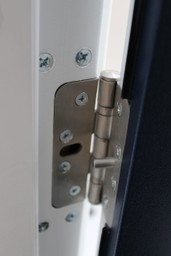
- Seals and Hinges: These components must be able to withstand heat without warping or melting. Intumescent seals expand in high temperatures, blocking smoke passage and maintaining the door’s integrity.
- Door Closers: Fire doors should never be propped open, and the door closer is a key component that ensures the door automatically shuts, preventing the spread of fire and smoke.
- Glazing and Viewing Panels: Certain fire doors may include fire-resistant glass, which requires careful installation to maintain fire resistance. Inspectors will check for any modifications to these panels that may reduce their fire-retardant properties.
- Gap tolerance: The gap between a fire door leaf and its frame should always comply with the manufacturer’s test evidence, as tolerances can vary between products. As a general guide, gaps are often specified in the range of 2 mm to 4 mm, but the exact requirement must be confirmed with the manufacturer. This should be checked at every inspection, and any door found outside the specified tolerance must be adjusted or replaced promptly.

Maintenance and Inspection Fire Door Requirements
Proper maintenance ensures that fire doors perform as intended throughout their lifespan. The Responsible Person or property manager must organise regular inspections and maintenance, which includes:
- Checking seals and hinges for any visible damage or wear.
- Testing door closers to verify that they automatically close as required.
- Examining glazing panels for cracks, damage, or modifications.
- Verifying gap tolerance, confirming the gap between the door leaf and frame is within the tolerance specified by the manufacturer’s test evidence.
Conducting Visual and Functional Inspections
Visual inspections can reveal many potential issues, but functional tests are also essential. This includes ensuring that door closers operate without sticking and that seals are intact. Inspections must also verify that nothing obstructs the door’s ability to fully close, as an open or partially blocked fire door loses its efficacy.
Explore further: Why regular fire door maintenance is essential.
Digital record-keeping is now strongly recommended and widely adopted. Digital maintenance logs make it easier to demonstrate compliance during audits, track inspection history across multiple doors, and quickly evidence corrective actions. This is particularly important for higher-risk buildings under the Building Safety Act 2022’s golden thread requirements.
Gerda’s own G-Smart fire door management software is purpose-built for this, tracking every doorset from installation through inspection and repair, with mobile access for on-site updates.
Documentation: Record-Keeping and Compliance Verification
Maintaining thorough records of all inspections, maintenance, and repairs is a fundamental part of fire door compliance. Detailed records provide a paper trail that demonstrates adherence to regulations. Key documents to keep include:
- Inspection logs detailing dates and findings.
- Maintenance reports documenting repairs or replacements.
- Certification documents confirming that fire doors meet required ratings (e.g., FD30, FD60).
In the event of a fire inspection, these records validate compliance efforts and demonstrate that safety protocols are actively managed.
Educating Residents on Fire Door Importance
In residential buildings with two or more dwellings, the Responsible Person has a duty to inform residents about the importance of fire doors. Educating residents helps prevent accidental tampering and promotes a shared sense of responsibility for building safety.
Key Resident Guidelines
- Do Not Prop Doors Open: Fire doors must remain closed to function effectively in emergencies.
- Report Any Damage Promptly: Residents should be encouraged to report visible damage to fire doors.
- Understand Fire Safety Basics: Providing accessible information on why fire doors are crucial fosters a proactive safety culture.
Building awareness through clear communication supports compliance and reinforces the building’s safety infrastructure.
Fire Door Compliance in New Builds and Renovations
For new builds and major renovations, fire doors must now be specified and tested to the current European standards—BS EN 1634-1 (fire resistance testing) and classified under BS EN 13501-2. References to the old BS 476 standard have been removed from Approved Document B (effective March 2025) and will be fully withdrawn by 2029. Any new specification still referencing BS 476 should be reviewed and updated.
For higher-risk buildings (18 metres or over, or 7+ storeys), the Building Safety Act 2022 introduced mandatory Gateway approvals—a three-stage process requiring fire safety plans to be approved before construction begins (Gateway 2) and a final compliance statement submitted before occupation (Gateway 3). Fire door specification and evidence must form part of the Gateway submissions.
During the planning stages, project managers should ensure that all specifications for fire doors align with these standards, preventing costly delays or future compliance issues.
Learn about Gateway Compliance Requirements.
Is Your Building Meeting UK Fire Door Regulations?
At Gerda Security, we help businesses across the UK achieve and maintain fire door compliance. Our certified doorsets are tested to both British standards, including FD30 and FD60, and European classifications under BS EN 13501-2, covering ratings such as EI30 and EI60. From full installation to ongoing inspection support, our team has over 25 years of industry experience helping clients identify the right fire door solution for their building type, occupancy, and risk profile.
Frequently Asked Questions
What is the main fire door legislation in the UK?
Fire door compliance in the UK is governed by several pieces of legislation working together: the Regulatory Reform (Fire Safety) Order 2005 (the primary duty on all non-domestic buildings); the Fire Safety Act 2021 (which extended obligations to cover flat entrance doors and external walls); the Building Safety Act 2022 (which created the Building Safety Regulator and introduced the Principal Accountable Person role for higher-risk buildings); and the Fire Safety (England) Regulations 2022 (which set mandatory inspection frequencies for multi-occupied residential buildings over 11 metres).
What are the consequences of failing to comply with fire door regulations in the UK?
Failing to comply with fire door regulations can result in serious legal and financial consequences for the Responsible Person. Under the Regulatory Reform (Fire Safety) Order 2005, enforcement action can be taken by the local Fire and Rescue Authority, ranging from informal notices through to formal enforcement or prohibition notices that restrict or close a building.
Prosecution can follow in serious cases, with unlimited fines and up to two years’ imprisonment for the most severe breaches. Beyond legal penalties, non-compliance significantly increases liability in the event of a fire — particularly where inadequate fire doors are found to have contributed to injury or loss of life. For higher-risk buildings, the Building Safety Act 2022 introduced additional scrutiny by the Building Safety Regulator, meaning the obligations and accountability of Responsible Persons and Principal Accountable Persons are greater than ever.
What is the role of the Responsible Person in fire door compliance?
The Responsible Person is designated to oversee fire safety measures, including fire door compliance, in a building. Their duties include conducting risk assessments, implementing safety measures, and keeping thorough records.
How often must fire doors be inspected?
Fire doors in common areas of multi-occupied buildings over 11 metres should be inspected quarterly, while flat entrance doors require annual inspections.
Why is it essential to keep records of fire door inspections?
Inspection records provide documentation of compliance efforts, which is crucial for regulatory audits. They ensure transparency and help verify that a building adheres to fire safety laws.